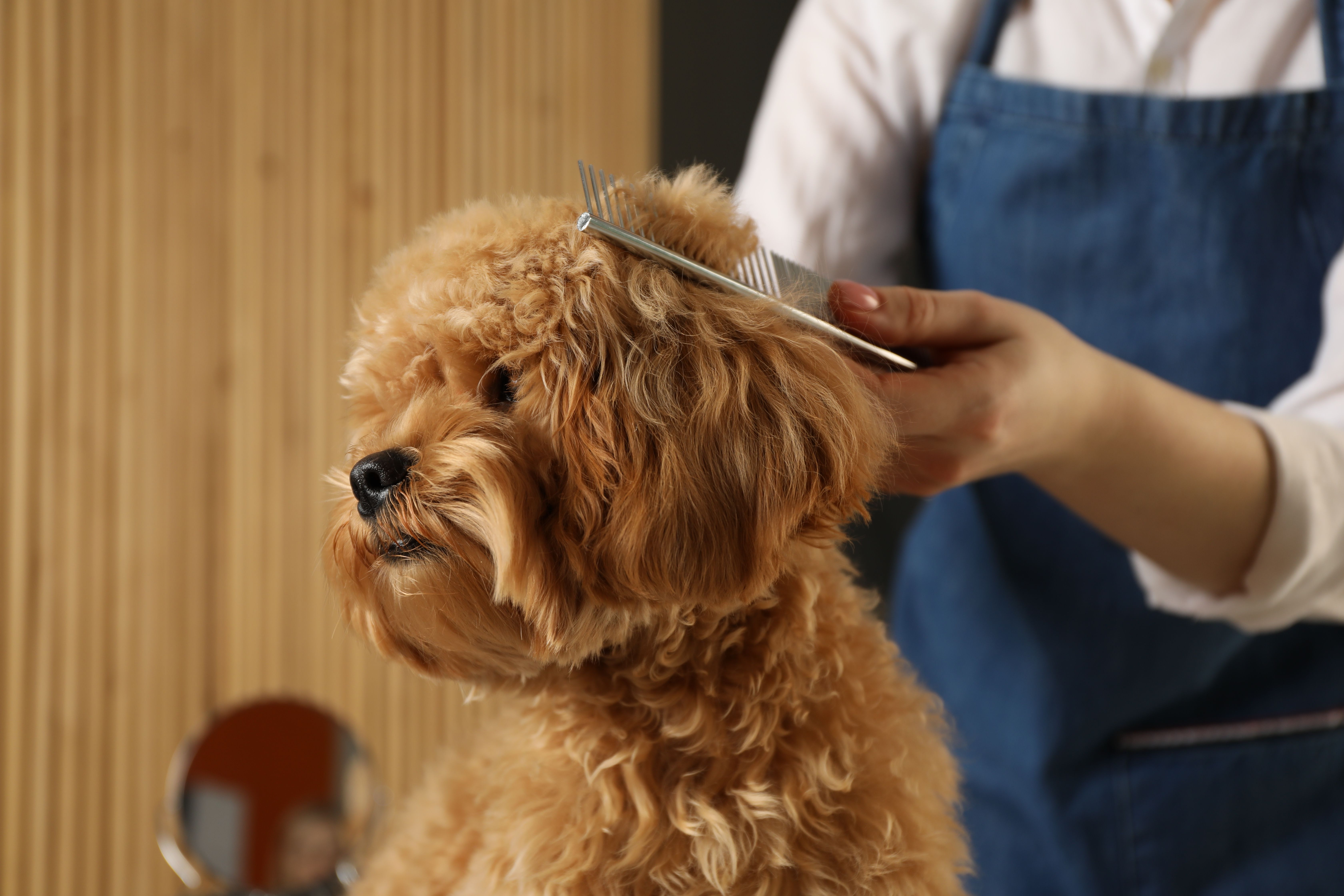
Regularly brushing your dog, in a way that is suitable for their coat type, is one of the easiest ways to keep them healthy and comfortable.
Brushing your dog helps produce and distribute natural oils that keep the skin moisturised, it also removes dirt, dead fur and dander, and helps reduce shedding. Brushing them regularly can prevent skin problems developing, or painful mats and allows you to spot any health problems they may have, such as lumps or cuts, ahead of time, allowing you to get them looked at.
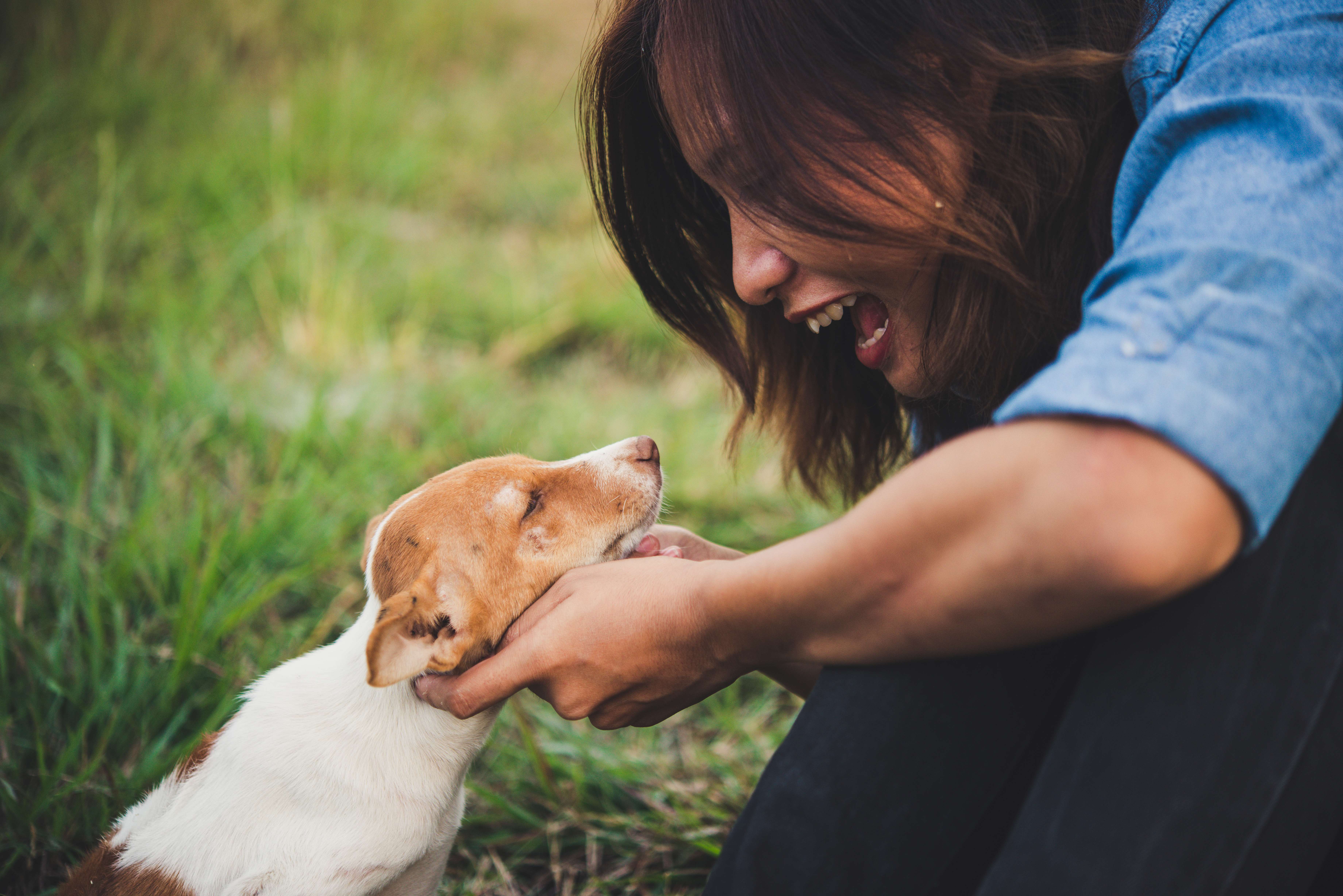
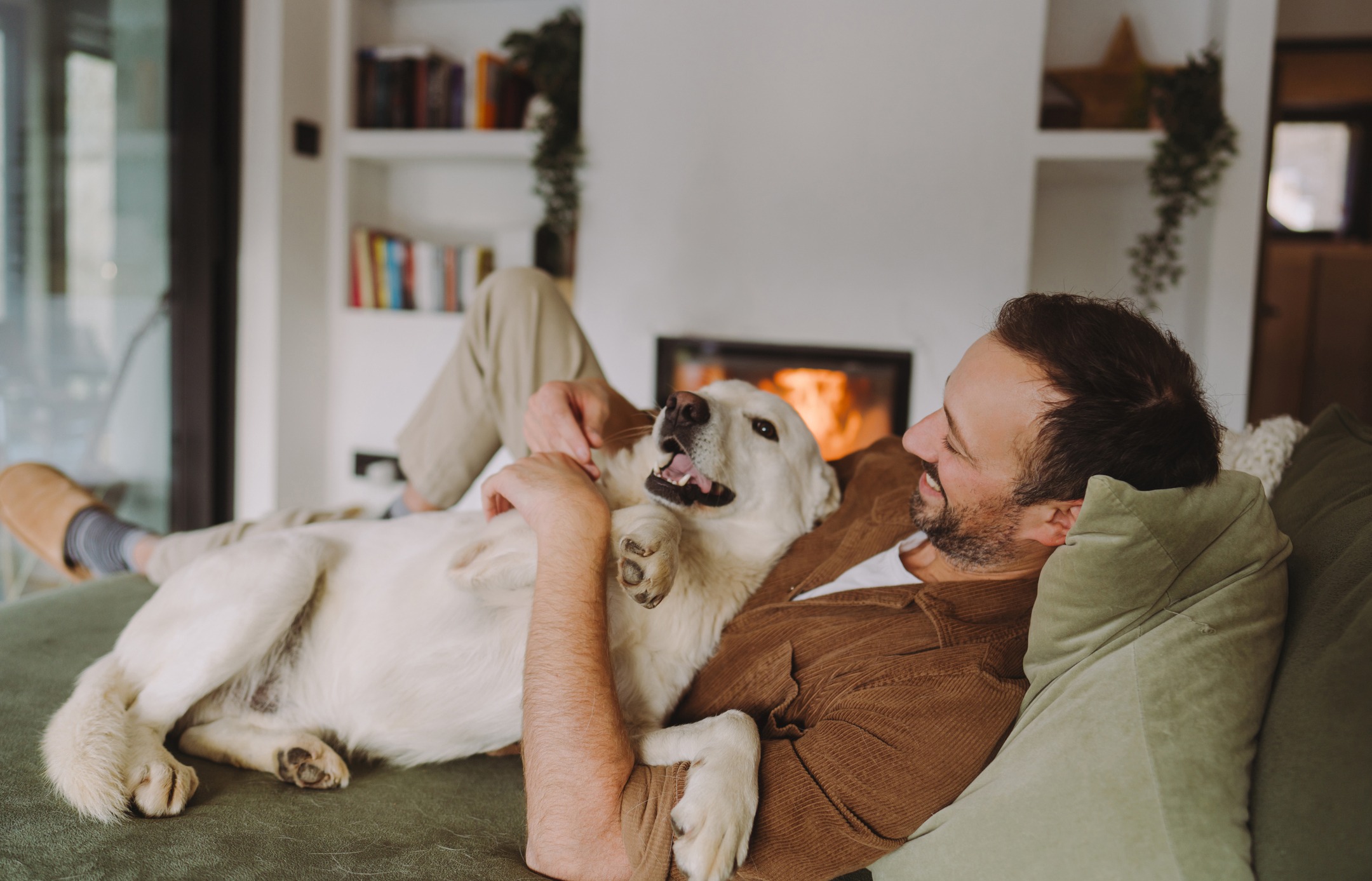
Not only does brushing keep your dog’s coat tidy, but it also helps create a bond with your dog. For some dogs, the repetitive, gentle motion can be soothing for them, allowing them to associate you with care and calm.
Check out our top tips broken down by coat type, so you can understand the frequency of brushing, different brushes and different motions, needed to care for your dog’s coat.
How should I take care of my dog’s curly coat?
Dog breeds with curly coats, such as Poodles or Labradoodles, are typically non-shedding, so how often you brush your curly-coated dog depends more on how long their hair is. Typically, the longer the hair the more often you must brush - some may require daily brushing with a slicker brush to remove tangles; you will also want to use a comb to check for remaining knots. You likely already take your dog to be groomed professionally, at intervals of every 4-6 weeks to stop matting, but brushing at home between visits is crucial.
How should I take care of my dog’s double coat?
Breeds like Labradors and Huskies with a ‘double coat’ normally have a thick undercoat and a coarser topcoat for waterproofing. These breeds may need regular brushing at least once a week to prevent matting and remove dead undercoat hair. Brush your double-coated dog with a slicker brush to remove dead hair and dirt and an undercoat rake to break up the mats underneath. During molting season, you may need to do this daily. During hot periods, it’s especially important as mats can cause your dog to overheat, as body heat cannot get away from the skin.
How should I take care of my dog’s wire coat?
Wire-coated breeds, like Irish Terriers or Schnauzers have a soft undercoat and a rough textured, wiry topcoat and are often kept short in coat by stripping the fur. A stripping knife can be used to pull away the dead hairs promoting the growth of soft new hair. To keep their coat in good condition, you should brush them with a slicker brush once or twice a week, and take them to a professional groomer every few months to remove their old coat.
How should I take care of my dog’s short coat?
Breeds like Greyhounds have a short coat that sits flat on the skin. It doesn’t usually tangle, but it still needs to be brushed weekly with a rubber brush or grooming mitt to remove dead hair and dander and promote the production of natural oils. If you have a short-coated dog, rubber grooming tools are a great choice, as they are gentle on the skin, but still have enough grip to remove the short hairs.
My dog doesn’t enjoy being brushed, how can I keep them calm?
A great way to help settle your dog and make brushing positive, is to create a routine in which you praise or reward them. Creating a routine allows your dog to predict what will happen. By brushing them in the same place or on a certain towel or matt, and by rewarding or praising them during or after the experience, they will know they will get rewarded, and will be more likely to come over.
Don’t begin brushing until your dog is calm - if they are excitable or playful then they may get hurt and create a negative association. This is especially important with puppies. Start by brushing the least sensitive areas, moving the focus slowly to areas that are more prone to matting, such as behind the ears and under the legs.
How should I brush my puppy?
If you have a puppy, it is recommended to start brushing them as soon as you’ve brought them home, as the earlier you begin the process, the quicker they will become familiar with it and be less stressed by it. Puppies can initially be quite unnerved by this new process, and its new sounds and sensations. To ease them into it, start with regular but short sessions of brushing them with an appropriate dog brush for their coat type. Introducing positive reinforcement in the form of a treat for good behaviour during brushing, is also a helpful trick.
How should I brush my senior dog?
When brushing older dogs, or those that may have health concerns, you should try shorter brushing sessions, with rubber tools that are softer on their skin, taking your time and making note of any signs of discomfort they’re showing.
Need more tips on puppy care? Check out our puppy care guide for new pet parents.
Insure Your Paws customers can get pet care advice, including answers to queries around brushing, by speaking with one of our registered vet nurses, anytime via our Assist Your Paws careline.
/happy-cheerful-hipster-girl-playing-with-her-dog-i-2026-01-07-00-55-59-utc.jpg?width=7360&height=4912)
/iStock-1490417345.jpg?width=2121&height=1414)
/iStock-1598514657 (1).jpg?width=2121&height=1414)
/iStock-2198220847.jpg?width=2160&height=1387)
/girl-walking-dog-on-leash-girl-walking-french-bul-2026-01-09-10-09-04-utc (1).jpg?width=6154&height=4103)