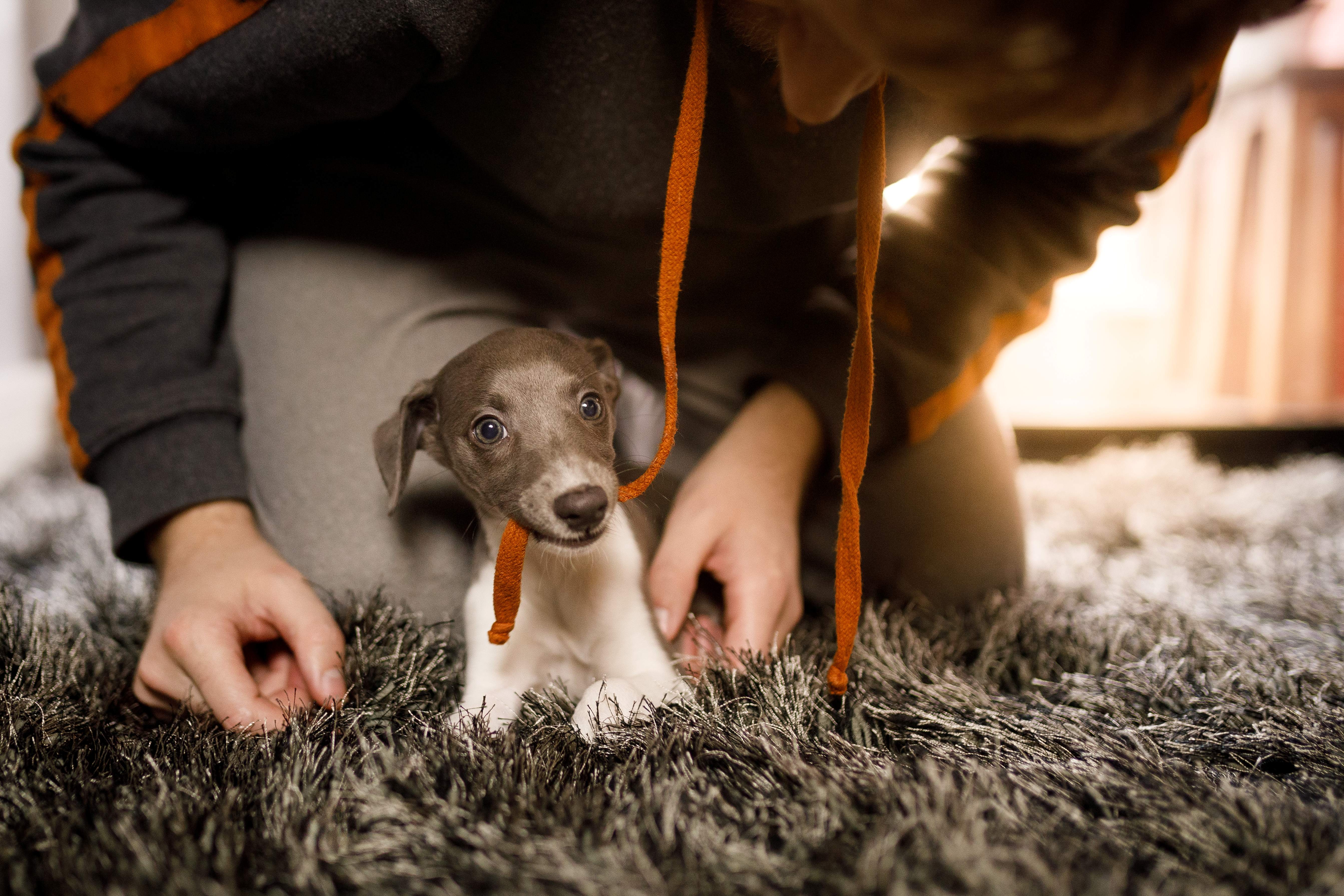
Got a new furry addition joining your family soon and wondering where to begin with preparing your home for their arrival? Not to worry! We’ve put together our top tips to successfully settle in and take care of your new furry family member.
How can I make my new pet feel comfortable in their new environment?
Moving in with a new family can be daunting for your pet, so you will need to prepare a safe place where they can rest and feel secure.
For puppies or dogs this could be a bed or crate that can be covered on top and three sides, in a quiet place. A breeder can supply a toy or blanket with the mother’s scent that can be used to help them settle in.
Cats or kittens benefit from starting in a quiet room away from the busiest part of the house. They’ll need a bed, litter tray, food and water bowls, cats prefer their water to be set away from their food bowl and litter tray.
You can gradually let them explore the rest of the house over the next two weeks, before introducing them to the garden if you’re going to let them go outside. This is to ensure they adjust to their new surroundings. It also helps to promote calm and comfort and to help them build trust in their environment and the people they share it with, before venturing further afield.
Before allowing them outside of the home, make sure they are up to date with the necessary vaccinations. You can find more information on which vaccinations pets in the UK need, in our recent FAQ post on the topic.
You should also make sure to remove any toxic plants or other objects that could harm your pet before bringing them home. For new dog owners, don’t forget to ensure that your garden is escape proof too!
Does my new pet need to be microchipped?
Yes, dogs and cats must be microchipped and your contact details kept up to date, should your pet become lost this will help with reuniting them. If your dog is in a public place they should wear a collar with an identification tag.
You can learn more about microchipping your cat in our previous article on the topic, and about UK dog laws you should know, which includes microchipping your dog, in our recent guide on the subject.
What steps should I take to ensure my new pet’s health is protected?
It’s a good idea to have pet insurance in place and register your pet with a vet, before you bring them home. There are four main types of cover offered by UK pet insurance providers; Lifetime Cover, Accident-Only, Time-Limited and Maximum Benefit.
Choosing which is best for you and your pet will come down to a number of factors – your pet’s breed, age and your financial situation in terms of how much you can afford to pay in premiums and out-of-pocket costs.
Here at Insure Your Paws, we only offer Lifetime Cover, as we believe it’s the most comprehensive cover. However, we’ve written a guide about choosing the right pet insurance, detailing the different types on offer, which may be helpful to you.
Your pet may also need vaccinations - the breeder you have purchased the animal from or the rescue centre you have adopted them from, will tell you whether your new pet is due any vaccinations and other preventative health care.
You can find out more about the most common conditions UK pets are given vaccinations and boosters for in our recent article.
How often will my new cat or dog need feeding and what is their diet?
The breeder or rescue centre your new furry friend came from should tell you what brand and flavour of food your pet is currently eating. If you decide to change to a different food, you should do this gradually to avoid them getting an upset stomach. Substitute a little more of the old food for the new type each day over 10-14 days.
Puppies up to 6 months of age will need feeding up to 4 times a day, whereas for older dogs it is recommended to feed them twice a day. Cats and kittens can be allowed to graze on dry food in-between two main meals a day.
Remember that treats for all ages count as part of your pet’s diet too, so try not to overdo the treats and make sure they are appropriate for your pet’s life stage.
What is the best type of toy to keep my new pet entertained?
With all the many wonderful toys available, it can be easy to get carried away and buy lots of new things straight away. However, your pet might find this overwhelming, so it’s best to start with a small selection of different types of toys, until you find out what they like best.
Your new pet will need frequent rest breaks from playing during this exciting time, so make sure any children know to leave them alone during their ‘down-time’.
Having a new pet is exciting and rewarding but it can be challenging too. If you’re worried about any aspect of your pet’s health or behaviour, you can call anytime to speak to one of our Registered Veterinary Nurses on our Assist Your Paws helpline.
Find out more about Lifetime Pet Insurance, or take a read through some of our helpful resources for pet owners.

/happy-cheerful-hipster-girl-playing-with-her-dog-i-2026-01-07-00-55-59-utc.jpg?width=7360&height=4912)


/girl-walking-dog-on-leash-girl-walking-french-bul-2026-01-09-10-09-04-utc (1).jpg?width=6154&height=4103)